Past Projects:
Hillfield Strathallan College,
Fostering Sustainability carried out a carbon footprint analysis of Hillfield Strathallan College (HSC) to determine how the College’s facilities and operations were performing from an environmental sustainability perspective. This study evaluated the carbon footprint (greenhouse gas emissions) associated with the College’s consumption of energy and water, fuel, paper and paper products, generation of waste, and recycling. Other environmental impacts associated with the College’s facilities and operations were also included, such as number of trees harvested to produce paper and paper products. Based on the information provided by the carbon footprint analysis, the College was able to identify its greatest environmental impacts, to evaluate possible strategies to reduce those impacts, and start to develop an implementation plan for reducing its overall carbon footprint,
The College is now developing its own Green School Plan which will include a road map for greening existing facilities and operations as well as future campus development, a review of alternative fuels and renewable energy options, a green purchasing plan, and plans to “green” the College culture.
Ridley College, St. Catharine’s, Ontario
Fostering Sustainability developed a comprehensive Sustainability Master Plan (SMP) for
The Sustainability Master Plan includes a campus eco-footprint “report card” that can be used by management to track progress annually, strategies for engaging the College community in environmental sustainability initiatives, changing attitudes and behaviours and promoting a “sustainability mindset”, and tools for educating the College in conservation and demand management.
A significant part of the plan is focused on reducing the environmental impacts of the school’s buildings and operations. For example, as part of the Sustainability Master Plan, Ridley now has a Sustainable Energy Plan aimed at reducing the College’s energy consumption by 33% over five years. Equally as important are the sections that look at ways for the school community to contribute to achieving the school’s environmental sustainability goals by supporting students in becoming informed and engaged environmental citizens, through what is taught in the classroom, and also in the examples that are set outside of the classroom, in offices, in residences and the dining hall.
Branksome Hall,
Fostering Sustainability developed Branksome Hall’s Environmental Sustainability Action Plan (BESAP) which includes strategies for helping the school achieve its mission of “building environmental sustainability into the life of the school”. As part of this process, Fostering Sustainability worked with a Steering Committee including members of the school administration, staff and faculty, students and parents. Working Groups were set-up to examine options and opportunities for reducing the school’s eco-footprint and fostering among students awareness of global citizenship and environmental stewardship.
The BESAP includes plans for greening of Branksome Hall in the following three areas:
- Resources (efficiency of facilities and operations, policies, purchasing, energy management, waste and recycling, water efficiency, landscape/grounds management and transportation);
- Community (student life, admissions, communications, advancement and working with parents); and
- Curriculum (inquiry and critical thinking about sustainable development in academics and professional development).
The BESAP also includes guidelines for integration of sustainability principles into the campus Master Site Plan Update. Branksome Hall has the goal of achieving LEED Silver certification for any new buildings and will consider LEED criteria when renovating existing buildings. The BESAP programme of energy efficiency and green initiatives will continue to reduce operating costs and the school’s eco-footprint, and is an example to students and the community at large as to how to incorporate sustainability principles within an existing complex campus.
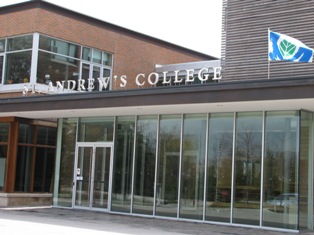
Stephanie Foster worked as Executive Director of the Centre for Environment and Sustainability, at
The Green School Master Plan included a multidisciplinary assessment of how the campus intersects with environmental systems and resources using the ecological footprint concept. The plan identified goals and objectives, key indicators, baseline and benchmarks in the following key areas: energy, water, materials, landscape, mobility and air. The energy section of the plan included a comprehensive plan for reducing the College’s carbon footprint by reducing direct and indirect greenhouse gas emissions, using renewable energy and exploring options for becoming carbon neutral.